Home / Models / System

NPM-W2 Multi-Function Production System

Large-board multi-function · Large components · Server / industrial

A highly versatile system supporting a wide range of components and feeding methods. Dual heads can carry an inspection head or dispenser, while a 30-station cart and tray feeder cover diverse components. Placement and inspection run as one continuous process for high productivity and quality.

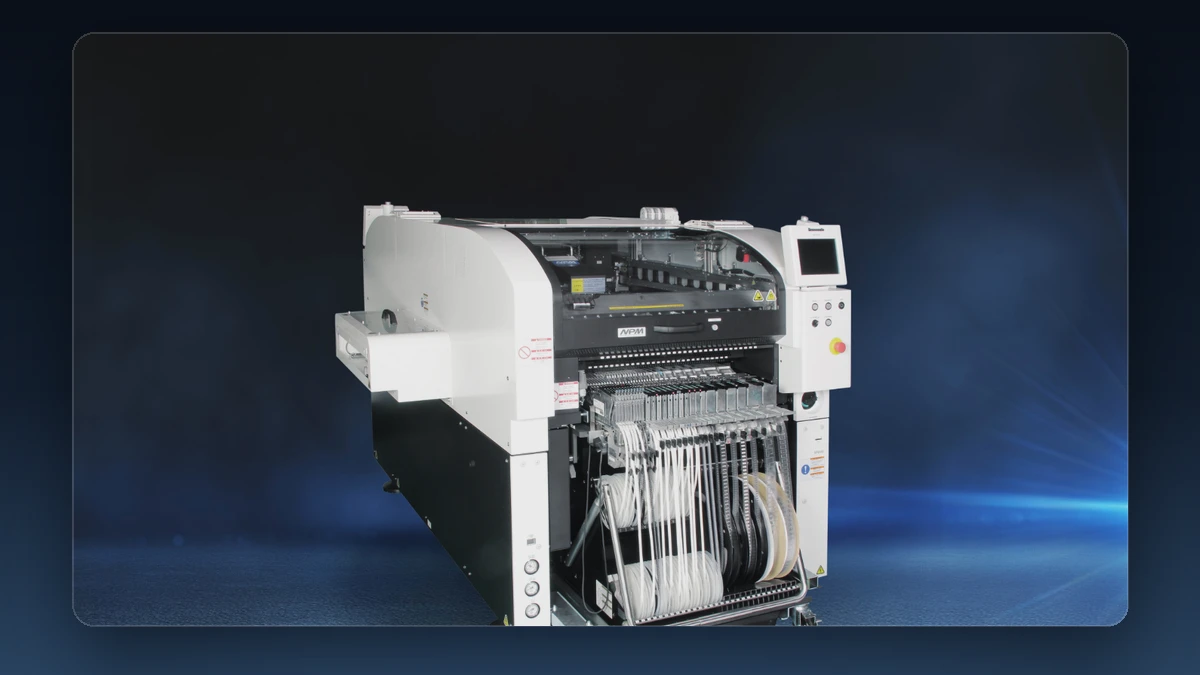
NPM-W2 Multi-Function Production System machine Machine photo · SMT line integration
Specifications
PositioningMulti-function system · High compatibility / large boards
Board sizeFull placement up to L750×W550; dual-lane full L750×W260
Max tact42,000 cph (0.086 s/chip); 35,000 cph (0.103 s/chip)
Placement accuracy±40 μm/chip; ±30 μm/chip (Cpk ≥ 1)
Component range03015 chip – L120×W90×T30/T40 or L150×W25×T30/T40; L135×W135×T13
Max components120 types (4 mm / 8 mm tape width)
Head structureDual heads, optional inspection head / dispenser
Large componentsLarge heavy BGA up to 15,000 recognition points; component height to 48 mm
Power · Air3-phase AC200–480V · 2.8 kVA; 0.5 MPa · 200 L/min (A.N.R.)
Dimensions · MassW1,280×D2,465×H1,444 mm · 2,850 kg (standard config, varies with options)

Figures adapted from public Panasonic Connect product information; subject to the official datasheet and contract.

Key functions & features

Continuous placement & inspection
Placement and inspection form one continuous system for high efficiency and high quality.
Large boards & components
Handles large boards and large components for server, automotive and industrial applications.
APC-5M control
Five-factor control for good-unit production and stable operation.
Automation & labor saving
Auto Setting Feeder and a range of automated equipment and software reduce manual work.

Advantages in detail

01Large components

Special nozzles and size-based scanning enable large, heavy BGA placement for server trends, with up to 15,000 recognition points.

Collision avoidance between placed and picked components and the head camera allows components up to 48 mm high (including board thickness).

02Maximum O.E.E

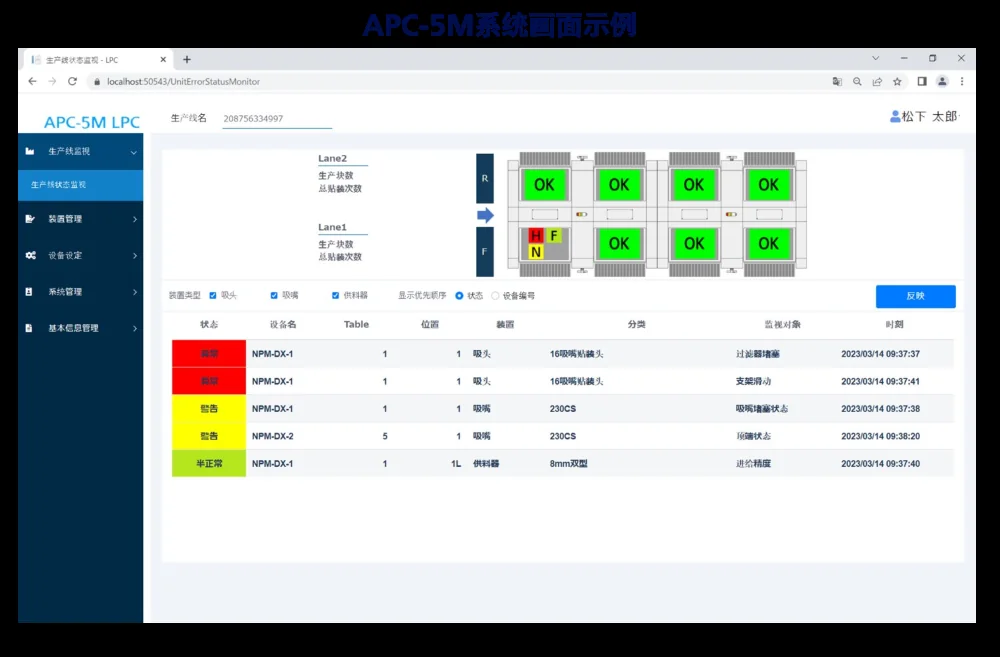
APC-5M (optional) monitors unit status and optimises maintenance, predicting deterioration before downtime. Line-wide status is displayed and analysed on the LPC screen.

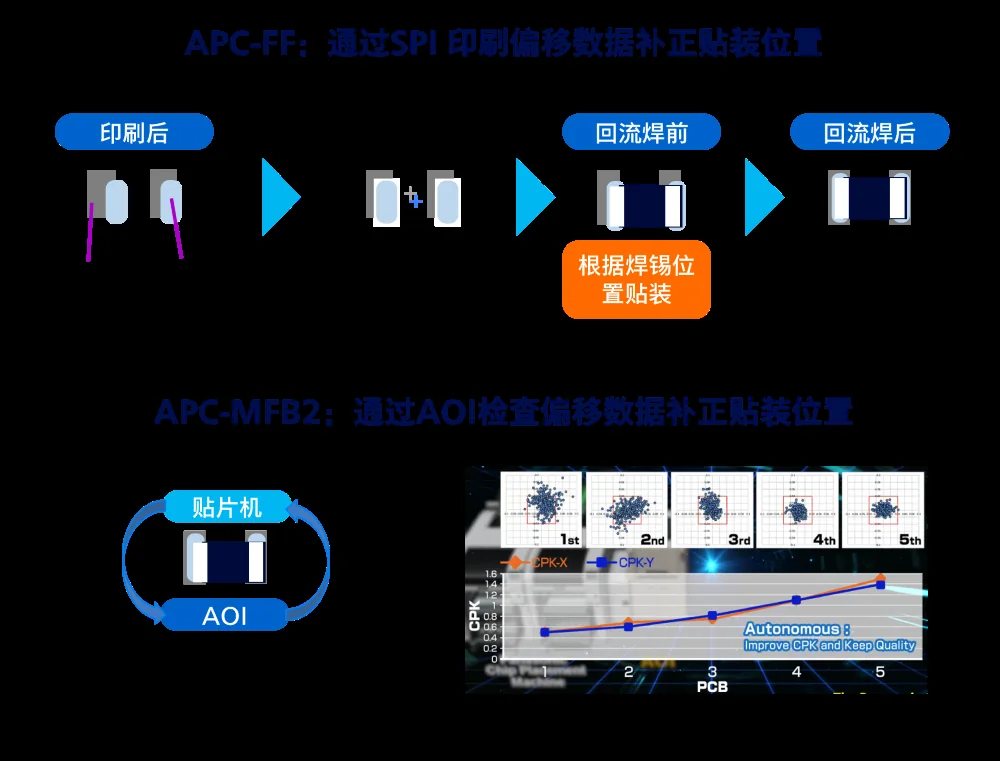
APC-FF / APC-MFB2 work with inspection machines to control solder print and placement deviation.

03Less dependence on skill

Remote operation resolves errors efficiently; AOI alarms show image-based information on the target machine for a skill-free response.

SOLUTIONS

Minimizing production loss, maximizing O.E.E

Reduce the various losses on the production floor to the minimum and improve O.E.E. (Overall Equipment Effectiveness). The APC engineering-control solutions below apply to the NPM-W2, adapted from public product information on Panasonic Connect.

01 · APC-5M (Optional)

Optimize maintenance through unit status monitoring and analysis

Software autonomously controls deviation across the 5M factors, while unit status monitoring and simple analysis enable more accurate and faster maintenance.

Predict problems before downtime

Monitor every unit in real time and control 5M deviation. Potential problems are detected before deterioration, allowing maintenance ahead of time and preventing unplanned stops.

Line-wide visibility

Data is shown not only per machine but across the whole line on the LPC (Line Process Controller) screen. Individual units can be reviewed and analyzed chronologically, and post-maintenance status can be checked to verify the effect of the action.

5M: the changing factors on the production floor — huMan, Machine, Material, Method and Measurement.
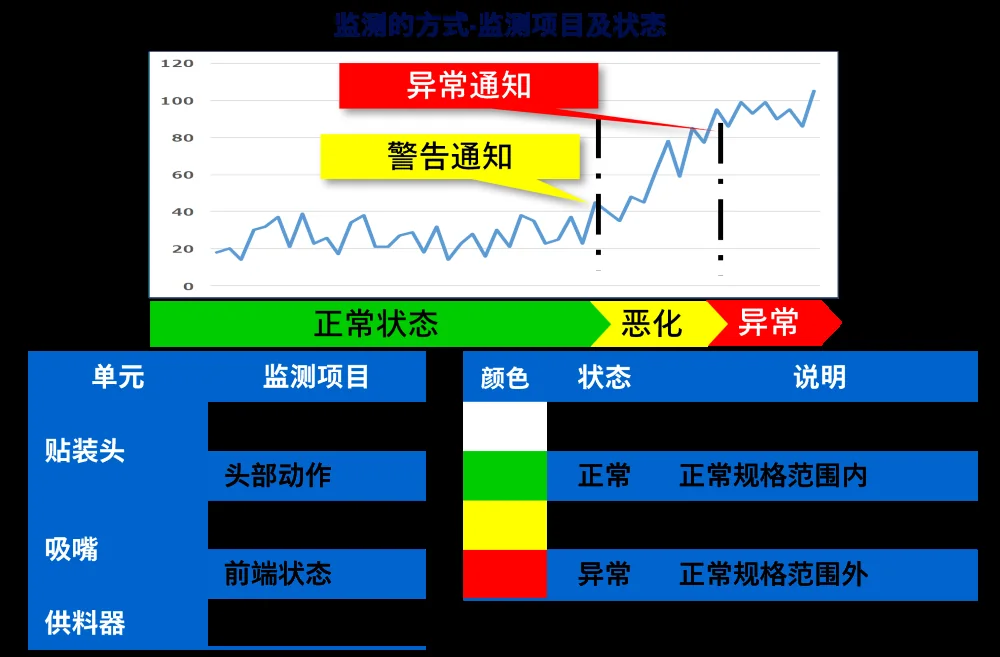
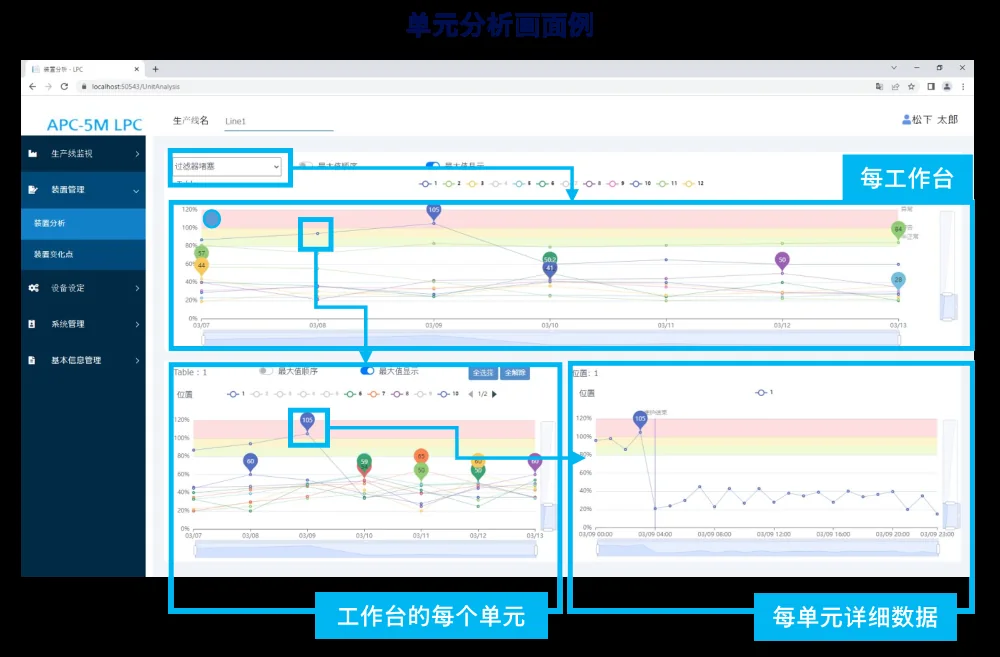
APC-5M unit status monitoring and alert mechanism
Unit monitoring: abnormal / warning / normal alerts
APC-5M unit analysis screen
Unit analysis screen
APC-5M system screen example
LPC system screen example
02 · APC system (APC-FF / APC-MFB2)

Interlocked with inspection machines to control deviation

We work together with inspection machines to control deviation in solder printing and component placement, securing placement quality.

APC-FF: printing deviation feedback

A proprietary line-control system. Based on solder position data from printing inspection, placement-position correction values are fed back to the placer to keep quality consistent.

APC-MFB2: placement deviation feedback

After placement, component position data measured by the AOI is fed back to the placer to maintain placement quality.

APC-FF and APC-MFB2 deviation feedback flow
APC-FF printing feedback / APC-MFB2 placement feedback

Typical applications

Source note:Features, advantages and specifications on this page are adapted from public product information on Panasonic Connect. We are an independent supplier and line integrator, not an official Panasonic site. Configuration, output and acceptance criteria are subject to the official datasheet and contract.